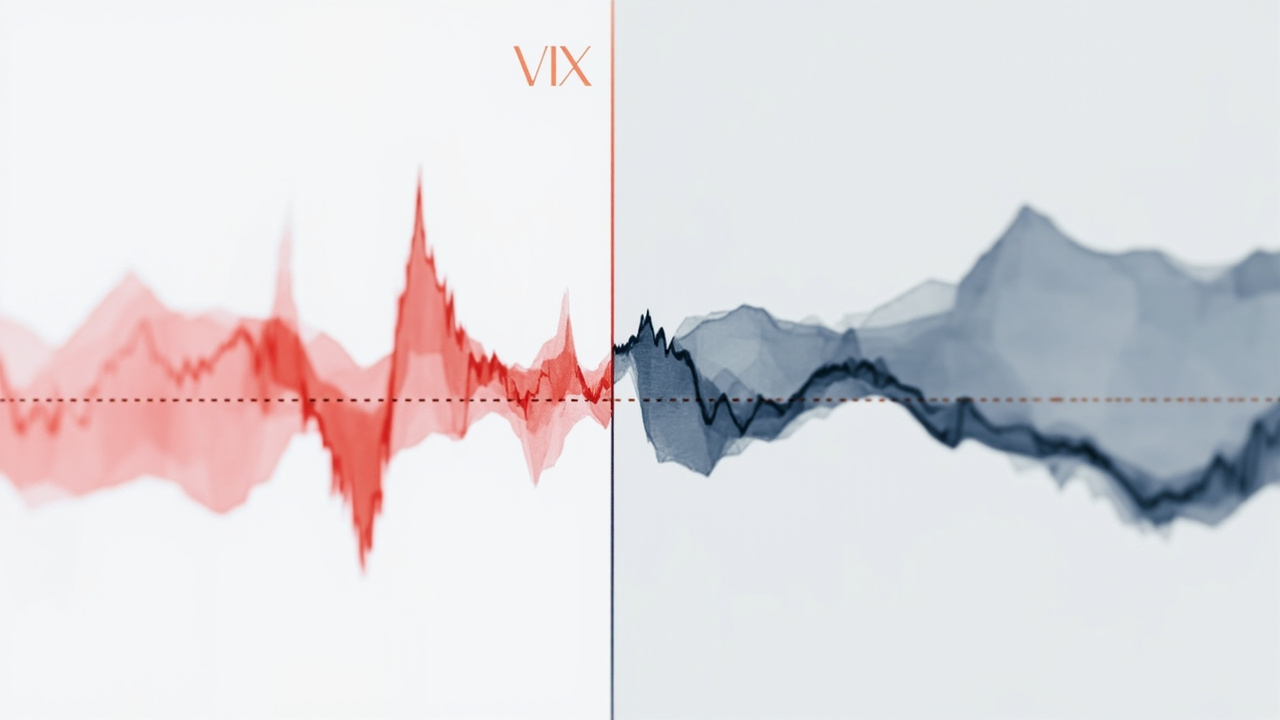
The CBOE Volatility Index — the VIX — is the market's most quoted measure of fear. But its utility goes far beyond a single number. The VIX level, its term structure, and the relationship between spot VIX and VIX futures are all signals that, read together, tell a more complete story than any price chart alone. Most retail traders check the VIX level and stop there. That's like reading the temperature and skipping the forecast.
What the VIX Actually Measures
The VIX is a measure of the implied volatility of SPX options — specifically, the market's expectation of 30-day forward-looking volatility derived from a wide strip of out-of-the-money put and call options. It is not backward-looking. It does not measure what happened; it measures what the options market expects to happen. This distinction matters enormously when using VIX readings to make decisions.
Historically, a VIX above 25 has corresponded with periods of elevated stress — earnings shocks, geopolitical events, macro data surprises. Below 15, the market is generally complacent. The 15–25 band is where most of real trading life happens: elevated but not panicky, volatile enough to extract premium but not so much that direction overwhelms everything else.
Backwardation vs. Contango
The most useful VIX signal most people ignore is the term structure — specifically, whether VIX futures are in backwardation or contango.
Contango means longer-dated VIX futures are priced above spot VIX. This is the normal state. It reflects the market's expectation that volatility will normalize over time — the spikes that drive VIX up eventually revert. In contango, selling volatility (short VIX futures or long VVIX positions) can work, but you pay the roll cost as the contract decays toward spot.
Backwardation means near-term VIX futures are priced above longer-dated ones — the market is expecting volatility to be higher now than in the future. This typically occurs right at market lows, when the market has just experienced a shock and fear is concentrated in the short term. Backwardation is a signal of acute but likely temporary stress. It can also occur when the market expects a specific near-term catalyst — an FOMC meeting, a CPI print — to resolve.
The actionable difference: in backwardation, the cost of hedging with VIX-based products is higher near-term, which makes selling the spike more attractive. In contango, buying long-dated VIX exposure to "lock in" elevated volatility before it normalizes is the better trade. We have been in a mild contango environment since early May — consistent with a market that has processed the April shock and is in recovery mode.
What Extreme Readings Tell You
A VIX above 30 has historically corresponded with genuine market stress events — the kind where realized volatility is high and direction is uncertain. At these levels, put skew steepens dramatically (OTM puts become very expensive relative to ATM puts), and call skew flattens. This is a structural signal that large players are paying up for tail protection. The question is always whether that protection is justified.
A VIX below 12 is the opposite signal: complacency. In low-VIX environments, selling premium is the dominant strategy because the market is systematically underpricing near-term risk. The danger is that low-VIX periods are often the buildup to high-VIX events. The longer the calm, the sharper the eventual storm. This is the regime most dangerous for option sellers who have been lulled into inadequate position sizing.
Practical Application
The current VIX reading in the low-20s — elevated but not extreme — suggests a market in a cautious recovery. The term structure is in mild contango, consistent with normalizing conditions. This is an environment where iron condors and other premium-collection strategies become more viable (elevated IV, but not panic-driven). It is also an environment where tail hedges are still expensive relative to their likelihood, making direct long-VIX positions inefficient.
The signal to watch: if VIX closes above 25 again without a clear macro catalyst, the regime may be reasserting. In that environment, shift toward defined-risk structures and reduce naked short premium positions.
Tools we use: We use OptionsStrat to visualize VIX-based strategy setups — including iron condor payoff diagrams, probability distributions, and break-even analysis for volatility-targeted positions.